

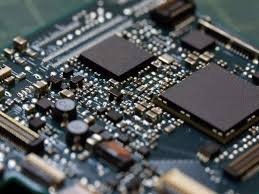
For years, India has been a big consumer of chips but not a big producer. Almost every smartphone, laptop, car dashboard, telecom box, TV, and solar inverter in the country depends on semiconductors that are designed and manufactured abroad, then imported as finished chips or inside finished products. This creates a simple but serious problem: when global supply chains get stressed, India feels it quickly through delays, higher prices, and production slowdowns.
That is why India’s new semiconductor push matters. The goal is not just to build one factory for headlines. The real goal is to reduce import dependence step by step by creating a working semiconductor ecosystem inside India, starting with packaging, then moving into full chip fabrication, and building design capability alongside both.
But the key question remains: can these new plants actually reduce imports in a meaningful way, or will they remain small islands in a sea of global supply?
Why India is pushing so hard, right now
Semiconductors are now as strategic as oil. They decide how fast your AI systems run, how safe your cars are, and how strong your defense and telecom infrastructure can be. When chips are scarce, even a strong manufacturing country can get stuck. The world saw this during the pandemic-era shortages, when auto production and electronics supply were hit across many markets.
India also has a clear domestic demand story. Phones, consumer electronics, EVs, renewable energy, industrial automation, and data centers are all growing. The more these industries expand, the more chips India needs every single year. If most of those chips are imported, India keeps exporting jobs and value to other countries.
So India’s approach is to build local capacity with heavy government support, and bring in global technology partners where needed.
The policy engine behind the push
India’s main public program is the Semicon India framework under the India Semiconductor Mission. The “modified” schemes provide fiscal support that can go up to 50% of project cost (or capex, depending on the category) for semiconductor fabs and for ATMP/OSAT facilities (assembly, testing, marking, packaging). Press Information Bureau+1
This is important because semiconductor plants are extremely expensive. Even a single modern fab can cost billions of dollars. Without major support, private companies struggle to justify building them in a new country where the supply chain is not yet mature.
In short, India is using policy to reduce early risk and attract anchor investments.
Understanding what India is building: fab vs packaging
Many people hear “chip plant” and assume it means a full wafer fabrication factory. But semiconductor manufacturing has stages.
A wafer fab is where chips are actually made on silicon wafers using complex steps like lithography, deposition, etching, and metrology. This is the hardest and most capital-intensive part.
ATMP/OSAT is the back-end stage where chips are cut from wafers, packaged, tested, and prepared for use in phones, cars, and servers. Packaging and testing is easier than building a leading-edge wafer fab, but it is still high value, job-rich, and essential.
India’s current pipeline includes both. That mix is not a weakness. It is a realistic path, because packaging plants can start earlier, build talent, and pull in suppliers, while the first major fab takes longer to become productive.
The big projects in India’s pipeline
Micron’s ATMP plant in Gujarat
One of the most visible early investments is Micron’s assembly and test facility in Sanand, Gujarat. Micron announced phased construction with a large cleanroom footprint, with operations planned to begin as the project ramps. Micron Technology
Indian business reporting in 2025 has described active construction and a push toward completion milestones, showing that the project is moving from announcement to execution. ETManufacturing.in+1
Why this matters for import dependence: memory chips (DRAM and NAND) are heavily used across electronics. Even if wafers are still sourced globally, local packaging and testing can reduce the amount of imported “finished” components and help Indian electronics manufacturing scale faster.
Tata Electronics + PSMC: a major fab in Dholera
A true turning point is Tata Electronics’ partnership with Taiwan’s Powerchip Semiconductor Manufacturing Corporation (PSMC) for a greenfield fab in Dholera, Gujarat, including technology transfer and support to build and run the plant. Tata’s own announcement highlights a target capacity of up to 50,000 wafers per month and a product focus that fits India’s industrial needs, like power management chips and microcontrollers. Tata Electronics+1
This matters because import dependence is not only about fancy “3 nm” chips. India imports huge volumes of mature-node chips used in power, displays, appliances, telecom, and cars. A fab that targets these categories can replace meaningful portions of imports over time, if it hits yield, quality, and cost targets.
CG Power + Renesas + Stars: OSAT scale for high-volume output
India has also approved a large OSAT project involving CG Power with partners Renesas and Stars Microelectronics, with government information pointing to high output capacity at scale. Press Information Bureau+1
If executed well, this kind of facility can attract more chip supply chain activity into India, because packaging plants often pull in substrate suppliers, materials vendors, cleanroom service companies, tool maintenance teams, and logistics upgrades.
So… will this reduce India’s chip imports?
Yes, but not instantly, and not fully in the first wave.
India can reduce import dependence in three practical ways.
First, by importing fewer finished components. When packaging is done locally, India can import wafers or partially processed inputs and export or consume finished packaged chips. That reduces dependence on finished chip imports and builds local process expertise.
Second, by localizing mature-node production. India’s first big fab plans are not focused on the absolute leading edge. That is actually fine, because many of the chips used in cars, power systems, appliances, industrial electronics, and telecom are made on mature nodes. If India can produce even a slice of these reliably, it reduces vulnerability and helps local manufacturers lock supply.
Third, by improving resilience. Even if India still imports a large share of chips, having a local base of packaging and some fabrication means India has options during global shocks.
But it is also important to be realistic. India will still import many advanced chips for years, especially the highest-end processors and cutting-edge memory, because those require very deep ecosystems, huge scale, and long learning curves. Building that takes time.
The real challenges that decide success
The biggest challenge is not land or announcements. It is execution.
Semiconductor plants must hit consistent yield and quality. A factory can be built in two or three years, but yield learning and stable production can take longer. Customers will only shift supply when the chips meet strict specs and arrive on time.
Another challenge is ecosystem depth. Fabs and OSATs need gases, chemicals, wafers, substrates, ultrapure water, cleanroom parts, precision logistics, and skilled technicians. If too much of this is imported, the cost and risk stay high. The plants can still run, but import dependence simply shifts from “chips” to “inputs.” That is still progress, but it is not full independence.
Talent is also a key constraint. India has strong engineering talent, but semiconductor manufacturing needs specialized experience across process control, tool engineering, reliability testing, and quality systems. The good news is that packaging plants can train large workforces and create a pipeline of future fab specialists.
What “success” looks like by 2030
A realistic success story is not “India makes every chip it needs.” A realistic success story is:
India becomes strong in packaging and testing, serving both local demand and some exports.
India has at least one or two high-volume fabs producing mature-node chips used widely in Indian industry.
India builds a stronger supplier base around these plants so that local value-add increases year after year.
That is how import dependence falls in a measurable way, and how India becomes less exposed to global disruptions.
Final take: India can reduce import dependence, but it’s a journey
India’s semiconductor push is no longer just a plan on paper. Projects like Micron’s ATMP facility and the Tata–PSMC fab show that capital, policy support, and partnerships are coming together. Micron Technology+2Tata Electronics+2
Will these plants reduce import dependence? Yes, especially for mature-node chips and for packaged components used in electronics manufacturing. But the reduction will happen in phases, and it will depend on steady execution, ecosystem building, and the ability to reach cost and quality levels that global customers trust.
If India stays consistent and keeps the focus on operational excellence, the next few years can move the country from “almost total dependence” toward
